

First and Foremost, Y'all Late
The need to celebrate firsts illuminates who's actually far behind.

To be in an exclusive club means embracing the terms of its exclusivity.
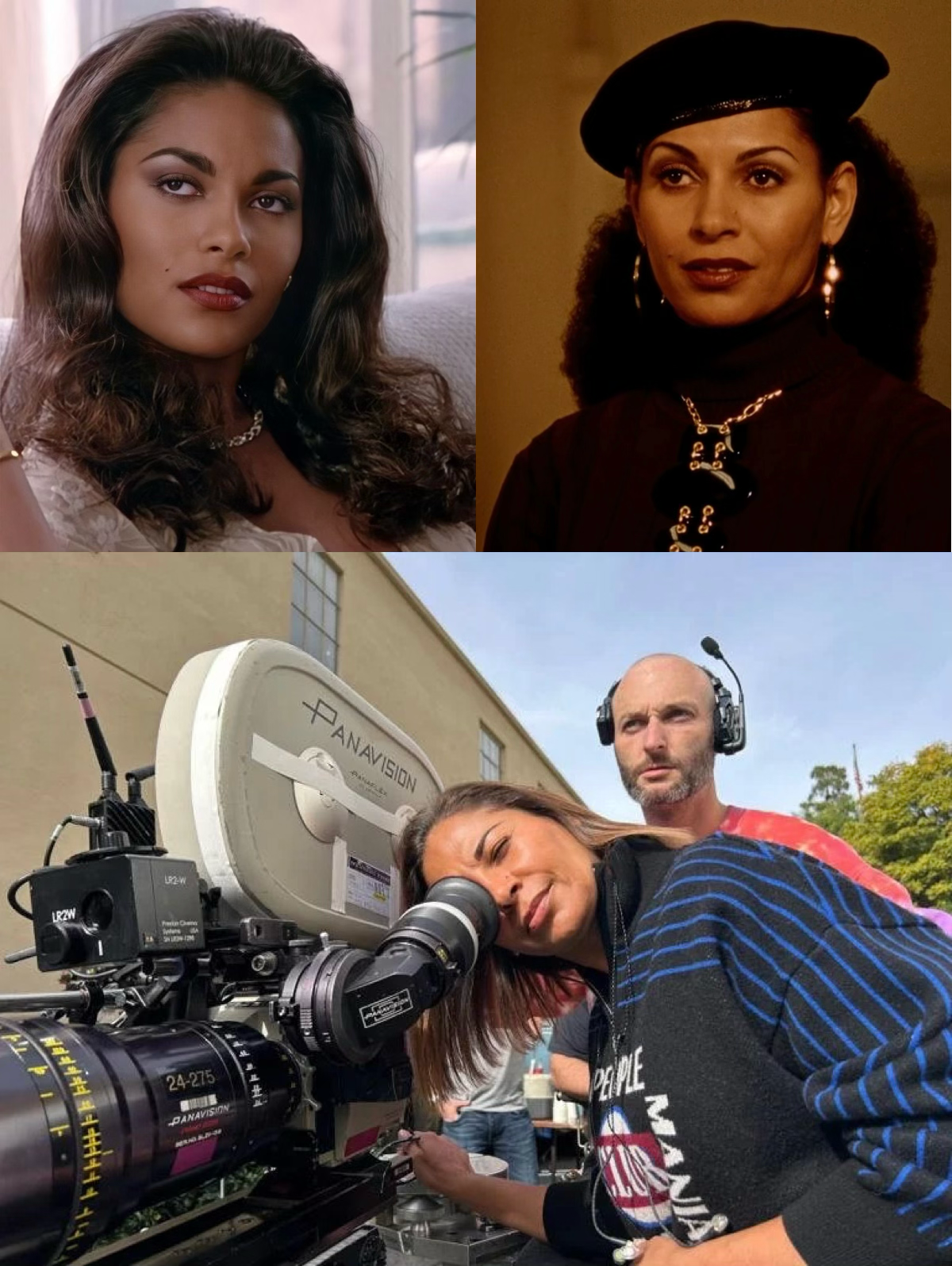
Emmy season has descended upon Hollywood, and the rather revealing statistic barking has begun. For example, Deadline posted an article with the headline “Salli Richardson-Whitfield Makes Emmy History Again As First Black Woman To Receive 2 Drama Series Directing Noms.” Richardson-Whitfield is a talented actor and director who deserves every accolade she’s received so far in her decades-long career in the film industry, but this headline centers a topic I want more people to consider: why are we supposed to give a single solitary fuck about “firsts?”
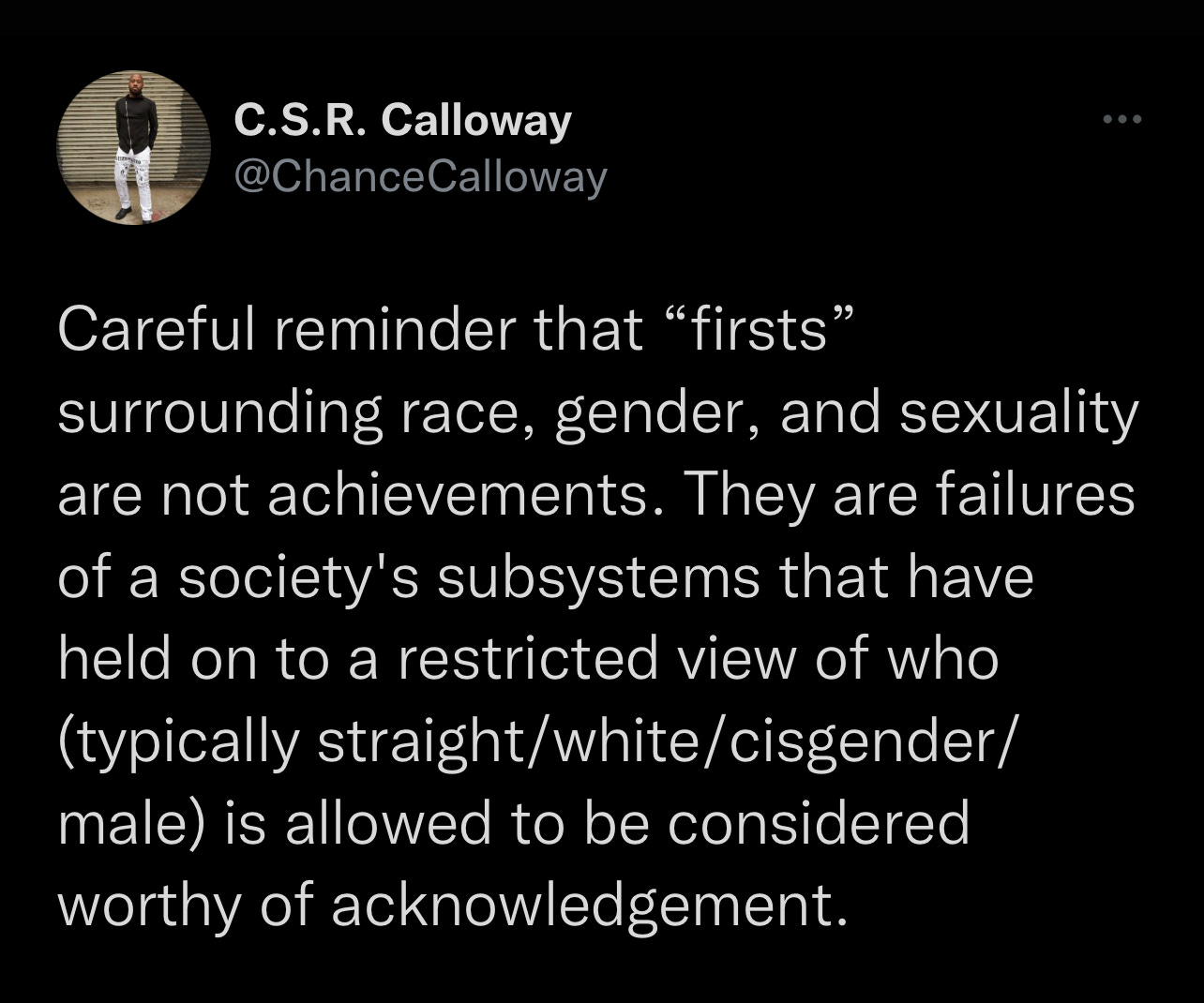
Firsts are supposed to be an indicator of progression. If an institution, awards-focused or not, has been around for a decade or so, firsts can be fun markers of growth and possibility. First person to run a five-minute mile. First tie in this category. First pair of siblings to receive the same honor. “Firsts” are made for trivia nights, though these film institutions would have you think that they are a barometer of excellence, which is not the case.
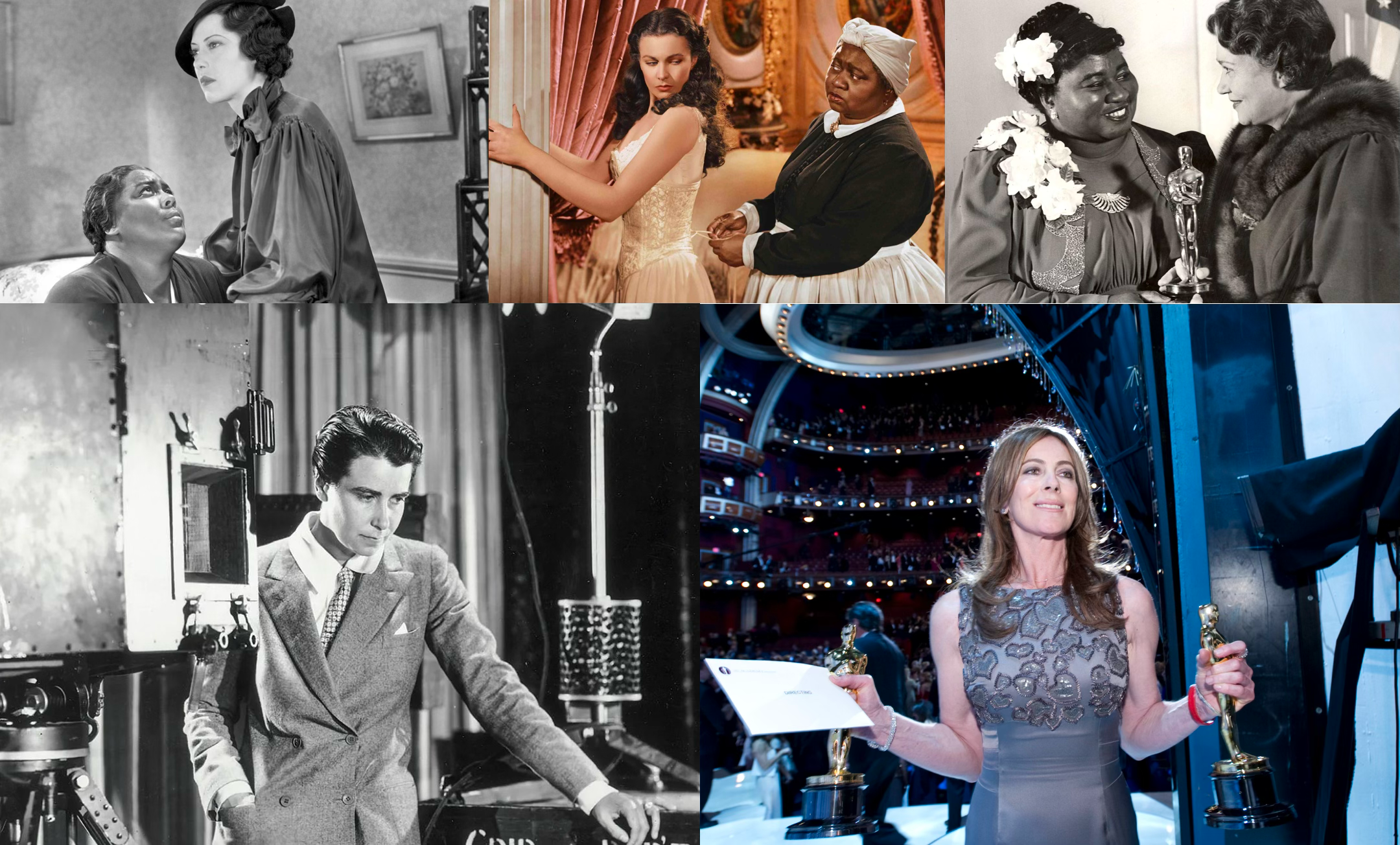
The problem with such suppositions is that they do not take into account the barriers preventing many qualified people from being the “first.” Let’s stick with Hollywood: Hattie McDaniel became the first Black person to be nominated for and win an Academy Award in 1940 at the 11th Oscars ceremony. That’s a valid achievement in spite of the nature of her role, a literal Mammy in the revered Gone With the Wind. Ten years later, Ethel Waters became the second Black person in any category to receive a nomination for the race melodrama Pinky. At that point, the statistic was already ridiculous; Black and non-white artists in front of and behind the camera had done stunning work in films like the original Imitation of Life (1934),1 the Josephine Baker showcase Princess Tam Tam (1935), and a double-feature of Lena Horne musicals, Cabin in the Sky and Stormy Weather (both 1943, and the chaunteuse should have won several accolades for the former). Sex symbol Sessue Hayakawa was acting, producing and writing. Likewise, Oscar Micheaux had been writing, producing and directing films since 1919, with his wife Alice B. Russell becoming one of Hollywood’s first (there’s that word again) women producers with 1931’s Darktown Revue.
Russell’s achievements remind us that it wasn’t just race where the Academy immediately fell short. Before the first Academy Awards ceremony, nineteen women had directed at least fifty-five films. The first time a woman was nominated for Best Director was at the 49th ceremony in 1976 (Lina Wertmüller for Seven Beauties) and the first time a woman won was in 2009 at the 82nd awards ceremony (Kathryn Bigelow for The Hurt Locker, only the fourth woman nominated).2
I don’t need to continue listing these types of stats for it to become obvious that white men built these institutions and prioritized films centering white males for decades, going on a century. “What about this film?” you might ask, thinking of a film starring or about or made by someone who was not a white male that received significant accolades. I’d ask you to consider that whenever those films do achieve success, the headlines are all about how they are an exception to a well-established rule. When The First Wives Club became a runaway hit in 1996, its success was treated as a fluke, and the trio of A-list white women stars (Oscar winners Diane Keaton and Goldie Hawn, and Oscar nominee Bette Midler) could not get a sequel greenlit. Despite having Oscar success with his previous films, director Spike Lee had to reach out to Black celebrities to get funding for his Malcolm X (1992).
We know that some of the greatest films never received Academy attention, some of the greatest shows were ignored by the Emmys, and some of our greatest performers never won or were egregiously never even nominated for the top-tier awards in their medium.
The foundations of so many industries, including the film industry, are built with biases—racial and gendered among them. When I read a headline like the one about Richardson-Whitfield’s achievement, I celebrate her work, but I don’t honor the honorific. I think of other Black women like Ava Duvernay, Regina King, Debbie Allen, and Millicent Sheldon who have directed stunning episodes of television without the resultant recognition. This isn’t to pit the women against each other, but to highlight that in an equitable industry, Richardson-Whitfield would not be the “first,” and that’s to say nothing of the women who haven’t gotten the opportunity due to racial and gender bias.
Think of those reports of where Academy members admit to rejecting a film (or outright not watching them) for their feminist, racial, or queer subject matter. The Academy has only recently begun cracking down on such flippancy, but it once again shows how, for many in the film industry, only white, straight, male-centered films are universal, and anything outside of that is catering to specific, smaller, less-worthy audiences.
For the most part, if you wanna get in, you gotta conform or perform at a level of excellence that isn’t expected of the centralized community.
This is why many creators today are divesting from such awards ceremonies (Oscars, Emmys, Golden Globes, Grammys). To be in an exclusive club means embracing the terms of its exclusivity. We know that some of the greatest films never received Academy attention, some of the greatest shows were ignored by the Emmys, and some of our greatest performers never won or were egregiously never even nominated for the top-tier awards in their medium. On top of that, year after year these institutions prioritize politics and perception (the Grammys want to be cool so bad) over quality of work.
This is not a case of one hating from outside the club because they can’t get in. This is a case of me wondering why we put so much hype on a club that utilizes the discriminatory policies of velvet rope racism—no brimless headgear, no baggy clothing, no athletic shoes. For the most part, if you wanna get in, you gotta conform or perform at a level of excellence that isn’t expected of the centralized community.
The current trend is celebrating the “first openly queer…” person to achieve certain distinctions, which at least acknowledges that societal deterrents have kept others from being able to present fully as themselves.3 It’s less of an achievement to be such a first, and more of a mark of shame on the institutions that continue to other, with the asterisk of extreme excellence.
When Imitation of Life was remade in 1959, Juanita Moore succeeded McDaniel and Waters to become the third Black nominee for Best Supporting Actress. This creates a statistic that does scratch deliciously at my brain, as the first three Black women nominated for Best Supporting Actress were nominated ten years apart, in 1940, 1950, and 1960. The fourth, Beah Richards for Guess Who’s Coming to Dinner, was nominated in 1968, breaking that pattern by two years. Lest you think progress was actually being made, the next nominee, Alfre Woodard for Cross Creek, was nominated a full 16 years later, in 1984.
The two women nominated between Wertmüller and Bigelow were Jane Campion for The Piano (1993) and Sofia Coppola for Lost in Translation (2003).
At 81 years old, Oscar nominee and Tony-winner Carol Channing publicly revealed her Black ancestry, a case of a person knowing how that truth could have limited her career opportunities like they did her contemporaries. “It's one of the great strains in show business,” she wrote in her memoir, Just Lucky I Guess (2002).